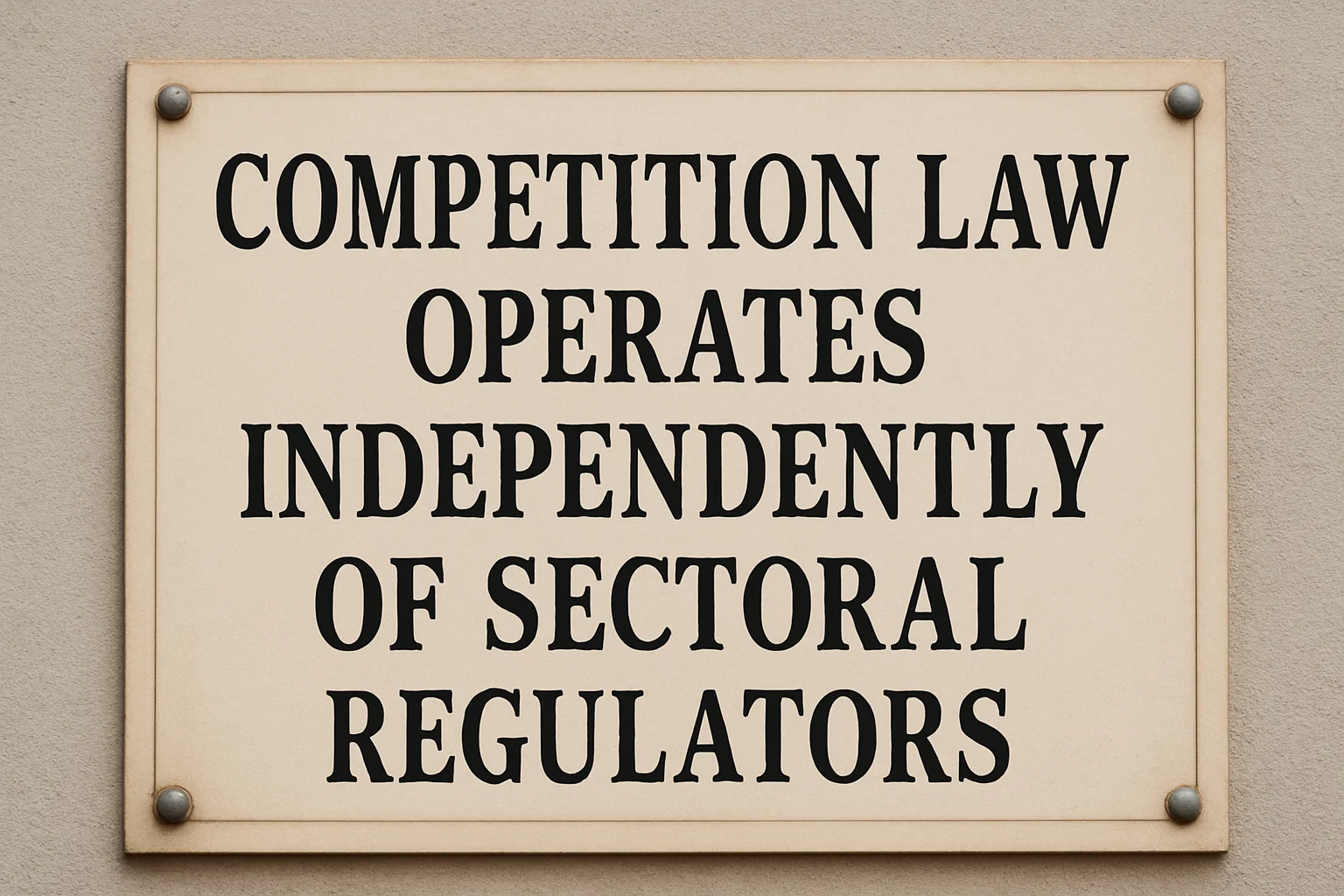
The Kerala High Court has delivered an important judgment that strengthens the role and independence of the Competition Commission of India (CCI). The Court ruled that competition law can operate independently even when a particular sector is regulated by a specialised authority. This decision came in the case JioStar vs Competition Commission of India, where Asianet had accused Jio Star of discriminatory pricing and anti-competitive conduct in the cable TV market in Kerala.
The verdict is significant because it settles a long-standing debate on whether the CCI can investigate anti-competitive behaviour in sectors that already have dedicated regulators, such as telecom, aviation, electricity, and broadcasting. The High Court has now made it clear: sectoral regulators and the CCI operate in different fields and can function simultaneously without conflict.
Background of the Case
Asianet had filed a complaint before the CCI alleging that Jio Star (a Jio subsidiary) was engaging in:
Anti-competitive conduct
Unfair and discriminatory pricing
Abuse of dominant position in cable TV signal distribution
Asianet argued that Jio Star’s pricing strategy was aimed at undercutting competitors in order to capture the Kerala cable TV market.
However, JioStar contended that because the cable TV industry is regulated by the Telecom Regulatory Authority of India (TRAI), only TRAI had the authority to investigate such matters—not the CCI.
This argument triggered an important legal question:
Does the presence of a sectoral regulator prevent the CCI from conducting its own investigation into competition-related issues?
The Kerala High Court has now answered this clearly.
What the Kerala High Court Said
The Kerala High Court ruled that the existence of a sector-specific regulator like TRAI does not restrict the powers of the CCI.
The Court highlighted:
TRAI regulates technical, licensing, pricing guidelines, and service quality.
CCI regulates competition, market fairness, dominance, and anti-competitive behaviour.
Both bodies have different objectives and functions, even if they sometimes deal with the same industry.
The Court said:
“Competition law operates independently of sectoral regulations. The CCI is empowered to look into allegations of abuse of dominant position irrespective of TRAI’s jurisdiction.”
This clarifies that CCI has the power to investigate anti-competitive practices even in highly regulated sectors like telecom and broadcasting.
Why This Judgment Matters
This ruling strengthens India’s competition framework in several ways:
Reinforces the CCI’s Autonomy
The decision makes it clear that the CCI does not need permission from TRAI or any other regulator to investigate dominance abuse or anti-competitive agreements.
Ensures Markets Stay Competitive
Even in regulated sectors, large companies can find loopholes to dominate the market.
This ruling ensures that such behaviour can be checked by the CCI.
Prevents Regulatory Gaps
If only sectoral regulators were allowed to act, certain issues might fall through the cracks.
Now, both CCI and regulators can act within their domains.
Encourages Fair Pricing and Consumer Protection
The CCI can address predatory pricing or discriminatory pricing even if TRAI has its own pricing guidelines.
This helps protect consumers and smaller businesses.
Impact on the Cable TV Market in Kerala
The cable TV market in Kerala has seen intense competition, with players like:
- Jio Star
- Asianet
- Kerala Vision
- Local cable operators
Asianet claimed that Jio Star was pricing its services in a way that pushed competitors out of the market.
With this judgment, the CCI can now fully investigate these allegations and determine whether Jio Star misused its dominant market power.
If the CCI finds evidence of anti-competitive behaviour, Jio Star could face penalties and directions to change its business practices.
Impact on Other Sectors
This ruling affects all sectors where specialised regulators operate, such as:
- Telecom (TRAI)
- Electricity (CERC, SERCs)
- Banking (RBI)
- Insurance (IRDAI)
- Aviation (DGCA)
The judgment confirms that competition law applies universally, and the CCI can intervene wherever market fairness is compromised.
Key Points
| Topic | Key Details |
|---|---|
| Case | JioStar vs Competition Commission of India |
| Issue | Allegations of discriminatory pricing & market dominance |
| Complainant | Asianet |
| Sector Involved | Cable TV / Broadcasting (regulated by TRAI) |
| Court’s Ruling | CCI can investigate even in regulated sectors |
| Reason | Competition law and sectoral regulation serve different purposes |
| Impact | Strengthens CCI’s authority in telecom and other sectors |
| Focus Keyword | Competition Law vs Sectoral Regulators |
Conclusion
The Kerala High Court’s ruling in the JioStar case is an important milestone for India’s competition enforcement landscape. It confirms that the CCI has full authority to investigate and take action against anti-competitive practices, even when a specialised regulator like TRAI is involved in the sector.
This judgment ensures that markets remain fair, competitive, and transparent. It also protects consumers and smaller businesses from unfair practices by larger companies. As India’s digital and telecom sectors continue to grow, this decision will play a crucial role in maintaining healthy competition.
More:- Competition